science

Buddhist Biology from Barash

chap3

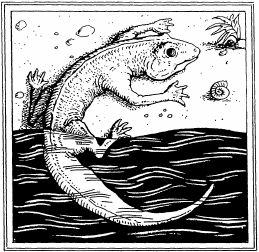
Illustration by Andy Gammon

Review of David P Barash, Buddhist Biology: Ancient Eastern Wisdom Meets Modern Western Science (Oxford University Press, New York, 2014). By Ratnaprabha.

Through the nineteenth century, Western science gradually disengaged itself from Christian religion, and scientists set themselves up as rivals to churchmen in interpreting the world. Nevertheless, religion remains a force in our culture, and some scientists detect a spiritual vacuum in their own hearts, turning back in hope towards religious traditions, at least for their own personal solace. Yet to answer one set of needs through a religious allegiance, and a separate set of needs through the discipline of science leaves a frustrating split, despite Stephen Jay Gould’s recommendation that the two should be confined to “non-overlapping magisteria”.[1] David Barash joins the club of those scientists wanting science and religion to be at least on speaking terms with each other, better still to marry.  His arranged bride for science is Buddhism.

Thus he proposes a “Science Sutra… [in which] not-self, impermanence, and interconnectedness are built into the very structure of the world, and all living things — including human beings — are no exception.… It can help animate — more precisely, humanise — this otherwise cold and dreadful skeleton of rattling bones”. (Pages 27-8. The image of science as a rattling skeleton is from Bertrand Russell.)

Barash is a psychology professor at the University of Washington who has been active in the field of peace studies, but by training he is an evolutionary biologist, and it is biology in particular that he wishes to give a Buddhist flavour. He is an avuncular and jaunty writer, and this being his 33rd book, you can see that his publishers give him some leeway. He admits that they wanted him to discard altogether a chapter that tries to add existentialism to the mix, and they’ve left him to his own devices to the extent that the Buddhist sections are riddled with, mainly minor, errors of fact and spelling. As for science, he discusses genetics, ecology and neuroscience as well as evolution, and he is on pretty firm ground here, though some mistakes do creep in – including the howler that Newton discovered the second law of thermodynamics (page 58).

An enthusiastic Buddhist for most of his life, Barash’s chief inspiration is the Vietnamese Zen teacher Thich Nhat Hanh. Thus, along with impermanence and non-self, the main Buddhist concept he wishes to apply to his biology is interconnectedness, all things linked in a dance of mutual dependence, a teaching that Thich Nhat Hanh adapts for modern audiences from Chinese Hua Yen Buddhism. Ecology, too, demonstrates that organisms and their environments constitute a net of mutual dependence.

Buddhist teachings argue that anything which depends for its state on external factors must change when those conditioning factors change (anitya), and if no part of that thing is immune from dependencies, then to identify any essential protected nucleus of self must be mistaken (anatman). In biology, impermanence is the rule, and evolution superimposes long-term inter-generational changes on the short-term developments undergone by every organism, so that only the genes themselves are (according to Barash) comparatively stable. My impression here is that Barash’s popular writing has not yet caught up with advances in genetics that he must surely be aware of. The gene as an almost fixed sequence of bases in DNA that codes for some detectable feature of an organism is only one component of inheritance. Genes interact in complex ways determined partly by environmental influences, events can switch genes on and off according to circumstances, and survival-enhancing features innovated by a parent can pass to its descendants without changes to the genetic sequence. As I was reading the book, there was news of research showing that mice taught to become frightened when they smelt cherry blossom could pass that fear to offspring they had no contact with: the genetic basis of the offsprings’ smell receptors had changed as a result of their parents’ experience.[2] A process like this is termed epigenetic, and epigenetics increasingly seems to be a significant factor in evolution.

In highlighting anitya and anatman (just two of the traditional three marks), and then adding interdependence, Barash is already reframing Buddhism according to his own preferences. As well as downgrading the third mark (duhkha, suffering), he adds pratitya samutpada, which is indeed basic to a Buddhist understanding of human experience, though it is incorrect either to translate it or to sum it up as only interdependence. It refers to an understanding of how the apparent entities that we single out from our experience come into being and pass away, as well as how they relate with other entities in the present moment. (The Present Moment, incidentally, is the name of Barash’s campervan, named so that he can sometimes claim to be “in” it.)

Barash is happy to modify traditional Buddhist teachings, if the results serve the needs of his audience: modern Westerners who have confidence in the findings of science. Thus he would ditch many of the practices of Eastern Buddhists (he rather condescendingly views them as naive and superstitious), and many of the teachings of what he calls “originalist” Buddhism. Someone has drawn his attention to David McMahan’s The Making of Buddhist Modernism, and since it is effectiveness and accuracy that motivate him, he is more than happy to confess that his grasp of Buddhism has come largely from the interpretations and revisions of westernised Buddhists. In fact he goes further, seeking to delineate what almost amounts to his own new religion, which he calls Existential Bio-Buddhism.

I think that this is fine, and it is very gratifying to see a popular scientist sharing an enthusiasm for Buddhism with his readers. Those whose interest is piqued can track down teachers and writers with a stronger basis in Buddhist traditions, and a deeper experience of practising them. But it is disappointing that he lacks the curiosity to further explore the aspects of Buddhism he is tempted to dismiss. (The “arrant nonsense” (page 11) of rebirth, for example, he explains as a “silliness about [transmigration of] souls” (page 138), and concludes that Buddhism must be “muddled” to teach both rebirth and anatman.)  One day, through a more daring dialogue than Barash risks, the interpenetration of Buddhism and biology is going to yield exciting fruit.

How is his biology informed by Buddhism? He uses it to speed up the defeat of essentialist and Platonic ideas in biology, and to support engagement with environmental issues, with its visions of interconnectedness and non-violence. Evolution confirms a kinship between humans and animals, hence a sense of solidarity with other forms of life, and a valuing of the natural world around us. Evolution and Buddhism also similarly agree that human beings are not special, indeed none of us as an individual ego is special either. In return, Barash is happy to contribute a conventional critique of Buddhism from a materialist scientific standpoint.

What other fruit could the dialogue yield?  What interests me most is the mind as an evolved phenomenon. From a human point of view, which is the only viewpoint we have access to, the degree and scope of our awareness is unparalleled in the natural world. Somehow we have come to the ability to reflect on our own experience, sometimes holding the stream of our consciousness in the illumination of mindful awareness. And we can enhance our level of consciousness through working on the mind with the mind. Perhaps as a consequence of this reflexivity, we seem largely trapped in a sense of separation from the world, a subjective me peering out at its hostile or alluring surroundings, always other. The teaching of pratitya samutpada states that this consciousness is dependently arisen, i.e. we can come to comprehend the evolutionary processes which gave rise to human consciousness, and thus understand our own minds better.

I feel that this understanding will not be well served by insisting on a materialist standpoint, as Barash and most scientists of standing do at present. Materialism seems to me to be primarily the rotting corpse of an old European debate, a debate that concluded first that mind and matter were two entirely distinct substances, and later that matter was the one real substance that made up everything in the universe, so that mind is nothing but patterns of electrical and chemical processes in the brain. The three truths that Barash imports from Buddhism – impermanence, not self, and pratitya samutpada – undermine such strict bifurcations as that between mind and matter. And I would say that honest reflection on experience doesn’t allow one to agree that awareness is illusory.  Like the objective world, the subjective or “inside” pole of experience must have arisen through law-governed causal sequences that can be understood. This is true of the whole range of minds found amongst animals, human and nonhuman, as well as this particular fleeting event of awareness that is my present moment. Buddhism wants to find evolutionary explanations (using the term ‘evolution’ in a general sense, not just as Darwinian natural selection). Buddhism has an evolutionary vision, as does biology. Biology is particularly interested in the evolutionary history of consciousness, Buddhism teaches its evolutionary potential, the further development of consciousness through contemplative methods.

Once mind or awareness is taken seriously as a genuine (though not substantial) phenomenon, we could consider its importance in the lives of animals as well as humans. It has arisen through evolution by natural selection: did its presence have any effects on the process of evolution? (Recall interdependence.) One possibility is through the Baldwin Effect, whereby innovative behaviours by animals (and behaviours have a mental origin) can propel them into new environmental niches where fresh selection pressures apply. For example, the Galapagos finches which now instinctively use cactus thorns to extract larvae from tree branches could not have started with a mutation for the behaviour – it is far too complex – they must have started with the novel behaviour, then passed it on through learning, until its different components were gradually selected for in the genes.[3]

Then there is the last of the three marks, duhkha or suffering. Entrenched views don’t just inhibit scientific progress, they may also inhibit compassion, and even promote antisocial practices in science, from cruelty to animals to environmental destruction and involvement in the technology of warfare. I think that an acceptable ethical framework, to be discussed and adopted by scientific communities, has its most likely origin in Buddhist ethics, a natural ethics based in intention and the consequences of behaviour rather than in scriptural commandments. Currently, scientists tend to govern their work with one eye on the law and the other on public opinion, but with little genuinely humanitarian ethical guidance.

Barash gives the impression of being an ethical man, and perhaps in a future work he will attempt to apply Buddhist ethics to his science. It may be for others to investigate how a fresh view of mental processes and their role in evolution, stimulated by Buddhism, could open up new avenues of research, as well as more creative ways of interpreting experimental results. More generally, Buddhism suggests a very open and provisional approach to concepts such as the gene, the species, and the individual organism. Constant reminders of impermanence, not self, and pratitya samutpada could release the creativity of scientists when they are entrenched in the “normal science” stage of struggling to fit research results into outdated theories, unwilling to let go of time-honoured biological concepts.

I would recommend Buddhist Biology to readers whose main allegiance is with science. It provides a friendly and engaging tourist guide to some of the features of Buddhism. We natives may chuckle at the guide’s simplifications and inaccuracies, but he points out impermanence, not self and interconnectedness; he shows how they apply to the biological sciences; and so he gives an authentic impression of Buddhism that may lead some of his readers to investigate it more thoroughly elsewhere, and to explore its practices in their own lives.

[1] Stephen Jay Gould, “Nonoverlapping Magisteria,” Natural History 106 (March 1997): 16-22.

[2] http://www.nature.com/neuro/journal/v17/n1/full/nn.3594.html accessed 1/1/14.

[3] D Papineau, “Social learning and the Baldwin effect” In A. Zilhão (ed.), Cognition, Evolution, and Rationality. (Routledge, 2005).  Also see Erika Crispo, “The Baldwin Effect and Genetic Assimilation” in Evolution 61-11: 2469–2479 (2007).

Advances in Science

chap7The Enriching of Memory, a collection of quotations on the site, should be a bit easier to navigate and search now.  Here is something from Michael Roukes on how Science progresses.

“While we keep our futuristic dreams alive, we also need to keep our expectations realistic. It seems that every time we gain access to a regime that is a factor of 10 different—and presumably “better”— two things happen. First, some wonderful, unanticipated scientific phenomenon emerges. But then a thorny host of underlying, equally unanticipated new problems appear. This pattern has held true as we have pushed to decreased size, enhanced sensitivity, greater spatial resolution, higher magnetic and electric fields, lower pressure and temperature, and so on. It is at the heart of why projecting forward too many orders of magnitude is usually perilous. And it is what should imbue us with a sense of humility and proportion at this, the beginning of our journey. Nature has already set the rules for us. We are out to understand and employ her secrets.

“Once we head out on the quest, nature will frequently hand us what initially seems to be nonsensical, disappointing, random gibberish. But the science in the glitches often turns out to be even more significant than the grail motivating the quest. And being proved the fool in this way can truly be the joy of doing science. If we had the power to extrapolate everything correctly from the outset, the pursuit of science would be utterly dry and mechanistic. The delightful truth is that, for complex systems, we do not, and ultimately probably cannot, know everything that is important.

“Complex systems are often exquisitely sensitive to a myriad of parameters beyond our ability to sense and record— much less control—with sufficient regularity and precision. Scientists have studied, and in large part already understand, matter down to the fundamental particles that make up the neutrons, protons and electrons that are of crucial importance to chemists, physicists and engineers. But we still cannot deterministically predict how arbitrarily complex assemblages of these three elemental components will finally behave en masse. For this reason, I firmly believe that it is on the foundation of the experimental science under way [sic], in intimate collaboration with theory, that we will build the road to true nanotechnology. Let’s keep our eyes open for surprises along the way!”

Roukes, Michael, in Scientific American, Vol 13 No1, 100.

The Enriching of Memory

EVOLUTIONlizard

Yet into this world of the machine  – this mechanical disturbance surrounded by desert silences – a ghost has come, a ghost whose step must have been as light and imperceptible as the first scurry of a mouse in Cheops’ tomb.  Musing over the Archean strata, one can hear and see it in the sub-cellars of the mind itself, a little green in a fulminating spring, some strange objects floundering and helpless in the ooze on the tide line, something beating, beating, like a heart until a mounting thunder goes up through the towering strata, until no drum that ever was can produce its rhythm, until no mind can contain it, until it rises, wet and seaweed-crowned, an apparition from marsh and tide pool, gross with matter, gurgling and inarticulate, ape and man-ape, grisly and fang-scarred, until the thunder is in oneself and is passing – to the ages beyond – to a world unknown, yet forever being born.

Loren Eiseley, The Firmament Of Time (Atheneum, 1967), 55-6.

This quote is by one of the finest science writers of the 20th century.  I’ve added hundreds of quotes to this site, writing I’ve collected over the years, in alphabetical order of topic.  Browse here.

Is Buddhism Scientific?

A Review of Buddhism and Science: a Guide for the Perplexed

p199by Donald S Lopez Jr (Chicago: University of Chicago Press, 2008).

After one of his recent lectures at Yale, a questioner almost pleaded with Donald Lopez: ‘Surely Buddhism is the most rational of religions’.  Lopez retorted, somewhat icily: ‘That is a Victorian conceit!’[1]  In this book, Lopez warms up considerably as he tries to defend Buddhism from the embrace of science and rationality.

The title is misleading.  Buddhism and Science simply aims ‘to document some of the ways that Buddhism has been represented as compatible with science over the past 150 years.’  (p216).  Lopez himself, a very fine Buddhist scholar and linguist, is unqualified to discuss scientific issues, as he freely admits (p4).[2]  So he tries to avoid the temptation to assess the validity of compatibility claims.

Scientific paradigms evolve, and the view of what Buddhism is has also shifted since the two were first compared.  With the image of both Buddhism and science shifting so much, Lopez is surprised that their compatibility has been claimed so consistently, especially since the need to counter anti-Buddhist views from missionaries and colonialists has long passed.  Before Einstein’s relativity demoted Newton’s mechanical universe, apologists seized on karma as a natural and mechanical law.  After the Second World War, Zen displaced Theravada in the popular imagination in the West, and the preoccupation became interdependence (derived from ‘creative readings of Nagarjuna’, p31); then emptiness and quantum physics, and today meditation, the brain and cognitive science.

After a long chapter on traditional Buddhism’s Mount Meru cosmology, perhaps the most obvious material to be dispensed with in the light of western geography, Lopez turns to the issue of social class and caste.  This issue is even less relevant to Buddhism and science than Mount Meru.  There may have sometimes been a racist, or at least nationalist, tinge to the Buddhist use of traditional terms like ‘aryan’ in the early 20th-century, and Lopez links this with the notorious racist ‘science’ of the same period.

Chapter 3 focuses on the Dalai Lama and another Tibetan monk, Gendun Chopel.  The latter encountered modern technology during his travels in the 1930s, and enthusiastically explained it to his compatriots.  Chapter 4 is the highlight of the book, covering the early decades of the investigation of Buddhism by European scholars, who constructed an image of a rational, even scientific, Buddha, which was then re-exported back to Asia.  The final chapter looks at laboratory studies of Buddhist meditation.

How do we compare Buddhism and science?  Perhaps the two simply rule over separate domains: the internal and external world respectively.  This was the Dalai Lama’s position in his early writings.  More true to Tibetan Buddhism is the distinction between the ultimate truth of liberation, and conventional truths concerning the mundane world.  But the line between Buddhism and science is not so easy to draw: Buddhism is itself concerned with conventional truths, and science regards itself as seeking Truth itself.

Some 20 years ago, the Dalai Lama’s youthful fascination with technology and astronomy firmed into what has become a very fruitful ongoing dialogue with many Western scientists.  He inaugurated – and is the focus of – a continuing series of biennial ‘Mind-life Conferences’,[3] where Buddhists and scientists seem to have genuinely learned from each other in a number of fields.  In fact, Lopez fears that the contact has infected the Dalai Lama with modernist tendencies, so that he is open to Buddhist ideas being corrected by science, and even prioritises experience over scripture (p139), a stance which Lopez regards as disturbingly innovative.

Nevertheless, the Dalai Lama seems to feel that certain Buddhist teachings need defending against scientific scepticism or materialism: karma and rebirth, yes, and most importantly, the need for compassion.  For example, in a recent book on his response to science, The Universe in a Single Atom – examined in some detail by Lopez,  the Dalai Lama’s enthusiasm for science stops short of fully endorsing evolution by natural selection.  From early on, the evolutionary nature of Buddhist thought has been recognised in the West,[4] but the Dalai Lama’s problem is with the mind appearing out of non-mind, and with randomness.  Since, in his view, mind and matter are quite distinct, how could a stream of mind appear in an evolving being, where no mind has existed before?  The Buddhist explanation has to involve karma, rebirth, and a beginningless mind-stream.  The Dalai Lama concedes that karma is an assumption, but no more than ‘that all of life is material and originated out of pure chance… karma can have a central role in understanding the origination of what Buddhism calls ‘sentience’, through the media of energy and consciousness.’[5]  The Dalai Lama understands Darwinism to claim that humans are ‘the products of pure chance in the random combination of genes, with no purpose other than the biological imperative of reproduction’,[6] leaving no room for true altruism.  Lopez ascribes to the Dalai Lama, probably mistakenly,  the very odd logic that if there were no karma and rebirth, there would be no Samsara, and so no place for the bodhisattva’s compassionate vow to liberate all from Samsara.  Surely the Bodhisattva’s compassion would not be stifled by a change in his or her conception of the scope of Samsara?

When the Dalai Lama expresses a hope that the wisdom needed on the Buddhist path will be enhanced by scientific discoveries, Lopez remarks that this was ‘something presumably not needed by pre-modern aspirants to [Enlightenment].’ (p151)  He goes on to attack the Dalai Lama’s omissions in this one book, which we must remember was specifically on the topic of science.  These include Nirvana and the non-physical realms, deities and the protectors he consults, and the possibility of living in the world untainted by the eight worldly concerns.

Elsewhere, the Dalai Lama comments extensively on such unscientific matters, but is not concerned to defend one glaringly pre-scientific Buddhist teaching. By the mid-19th century, Christian missionaries were deriding Buddhists for believing in Meru, the giant central mountain, topped by heavens, on a disc-shaped world.  Ignoring their own churches’ struggles with science, they upheld Western map-making and astronomy as showing the true state of affairs.  One Japanese Buddhist tried to defend Meru on scientific grounds (of course his efforts were fruitless) and some Tibetan lamas were still clinging to Meru cosmology quite recently.  So why did the Enlightened One have such poor knowledge of geography?  The Dalai Lama is prepared to say that the Buddha was simply wrong.  For Lopez, Meru looms large, and he strangely compares a Buddhism lacking Mount Meru to a chessboard without the Queen — if Buddhism loses Meru, he says, what doctrines are safe? (p72) However, Buddhist history is littered with the husks of superseded teachings.  A standard Mahayana explanation is that the Buddha, through skilful means, taught provisional truths to those not ready to hear higher truths.  More likely, he made use of contemporary Indian myths and travellers’ tales to construct a cosmology that could act as a vehicle for spiritual teachings, and didn’t know that it was not literally true.

The French Sanskrit scholar Eugène Burnhouf wrote the first authoritative book on Buddhism, published in 1844, after eagerly translating thousands of pages of Sanskrit manuscripts newly arrived from Nepal (p168).  His disciple, Max Müller, based at Oxford, built on his master’s erudition, and established an academic view of the Buddha that is only now being seriously questioned well over a century later (p187).

While celebrating Burnhouf and Müller, Lopez laments their misrepresentation of Buddhism as a stark humanistic rationality, which has today developed into modernist versions of the ancient religion ‘with the vast imaginaire of Buddhism largely absent; … extracted from… a universe dense with deities.’ (p216)  As a detached connoisseur of Buddhist cultures, depending chiefly on the preserved texts, Lopez finds modernising trends in Buddhism genuinely distressing, I think, and one has to sympathise.  Yet Buddhism has always been transformed by the cultures it has encountered, at the same time as it has enriched those cultures.  What is important for the practitioner (as opposed to the scholar) is not whether literal beliefs in Mount Meru survive, but whether we still have an effective path towards awakening.  Conceptual hints concerning awakening retain impressions of the Asian cultures Buddhism has passed through.  Soon they will be couched in terms which recognise the insights of Western thinking and the discoveries of modern science.  Yet these discoveries are limited in their scope.

The limits of any scientific investigation of phenomena come at the edge of a direct apprehension (as opposed to a conceptual description) of the streaming ‘contents’ of consciousness.  Lopez quotes DT Suzuki: ‘the spiritual facts we experience are not demonstrable, for they are so direct and immediate that the uninitiated are altogether at a loss to get a glimpse of them.’[7]  Such spiritual discoveries may provide scientists with hints concerning where to direct their observations, as well as suggestive explanatory frameworks. Suzuki noted a century ago that ‘Buddhism clearly anticipated the outcome of modern psychological researches’[8] (for example, explaining mentality with no place for a soul), and scientific psychology is still learning from Buddhist accounts.

A Chinese Buddhist commentator in the 1920s (Taixu) saw science as a stepping-stone towards a wisdom that goes beyond science and logic (p19).  Lopez takes this to imply that science can confirm the insights of Buddhism, but can’t achieve those insights itself, and regards this as a ‘strident’ view.  He seems not to distinguish between the attempt to convey one’s direct apprehensions of reality in concepts, and those realisations themselves.  Neither science nor Buddhism can have insights; each provides a set of frameworks for conveying experience.  Scientists have shown that careful quantitative observation allows meaningful accounts of reality to develop more or less cumulatively; those accounts are what we call science.  They help us understand how the material universe (including the human brain) works, and how to manipulate it effectively.

Are the realisations of mystics and meditators legitimate?  Yes, but the accounts the meditators give of their experiences, their interpretations, can surely be clarified –and even corrected – in the light of other, scientific sources of knowledge.  Suffering, impermanence and insubstantiality are still there, both subjectively and objectively.  They are amenable to discovery through contemplation, and through reflection on one’s experience of life.  They are also accessible to empirical investigation.  For Buddhists, the most significant arena of investigation is human experience, and thus the human mind.

The Dalai Lama has encouraged neuroscientists to investigate brain changes during meditation, and thus they have found willing volunteers amongst Tibetan monastics.  Wider studies have looked at the psychological effectiveness of meditation, though these have generally used simple meditation techniques that are not specifically Buddhist.  In a bizarre narrative, which is also something of a tour de force, Lopez opens the fifth chapter with a ten page imaginary account of a Tibetan performing the elaborate ritual visualisation of the deity Vajrayogini, only to be interrupted by the discomfort of his rectal thermometer and scalp electrodes!  It’s a striking juxtaposition of two apparently unrelated worlds.  How can you investigate scientifically whether Buddhist meditations work?  Can you even tie down what it would mean for them to ‘work’ in a truly Buddhist sense?  Indeed, that rectal thermometer may have registered a rise in body temperature.  So what?

Rather than meditation and other practices that constitute the Dharma, Lopez’ primary focus is on the image of the Buddha.  He contrasts the larger-than-life Buddha of the canonical texts, even the less baroque Pali ones, with the reasonable humanistic educator Buddha of the Western scholars.  Yet a number of those same texts represent the Buddha as asking his followers to honour the Dharma rather than his person, and to put his teachings into practice.  Arguably, his central teaching was of conditioned arising (pratītya samutpāda).  Specifics of the causes of suffering in craving, aversion and ignorance, and of cultivating a path to awakening, are instances of conditioned arising.  Conditioned arising asserts that there are regularities in human life, as well as in the world, that ensure that one set of circumstances surely evolve into particular new circumstances, a process that can be discovered.  It is here that the strongest parallel with science lies.  Science too is trying to trace the lines of causality that explain observed situations, and predict how they will evolve. Science is on its surest ground when it explores the regularities of matter and energy, untouched by the human will.  But there is no need to debar science from the phenomena of the psyche, and even the suggestion of karmic links between one’s willed actions and later events should be, to some extent, testable scientifically.

However, does Buddhism need that supplementation from science?  The question for pious traditionalist Buddhists is: ‘is there any knowledge beyond the content of the Buddha’s enlightenment that could be discovered by science?’  Many have been tempted to answer ‘no’, believing that the Buddha withheld certain truths either because people were not ready for them, or because they were not relevant for overcoming suffering and gaining enlightenment.  Could the Buddha, for example, have accepted belief in Mount Meru only because he knew no better? How much did the Buddha know?  Lopez asserts that ‘everything’ is the traditional view; some of the Mahayana texts he quotes seem to support this, though his canonical Pali sources circumscribe the Buddha’s knowledge comparatively severely.[9]  It is, surely, preposterous to claim (as Lopez puts it) that an Iron Age teacher understood Einstein’s theory of relativity, though a number of eastern Buddhists have done so.

Whatever the Buddha did or didn’t know, surely we are aided in comparing Buddhism and science by comparing their respective sources of knowledge.  Here, Lopez is interesting on sources of knowledge in Buddhism, especially when he considers the Dalai Lama’s views, but his ignorance of science makes it difficult for him to assess the comparison effectively.  Perhaps it is deliberate that there is no definition of science in this book.  This certainly helps Lopez avoid directly confronting the issue of compatibility from scratch; he prefers simply to analyse the succession of claims made by other writers.  In any case, he questions the much-vaunted ’empiricism’ of Buddhism, claiming that experiences, including deep meditation experiences, are recounted in the light of, and validated from, scriptural authority (p210).  (Science, also, is much less empirical than is often maintained, observations often being strongly influenced by theoretical assumptions.)

This is a valuable and fascinating survey of encounters between Buddhism and science.  I’m left with a sense of regret, however, that Lopez did not seek out as co-author an academic as literate in science as he is in historical scholarship, so that the two great disciplines could be brought at least to a point of mutual comprehension.  From that point of comprehension, the compassionate project of Buddhism can be enhanced by the insights of science, and by applying science to beneficial technologies.  And science can perhaps learn a non-supernatural ethics from a friendly Buddhism, as well as finding a guide into the subtleties of human consciousness.

First published  in Western Buddhist Review, Vol. 5.

Notes.

[1] ‘The Problem with Karma’, the third Terry Lecture at Yale University, 6 October 2008, video stream available online.

[2] This is not just modesty; for example, when Lopez humorously attempts to imagine a Buddhist response to cloning, he seems unfamiliar with what cloning actually involves (p150).

[3] Dalai Lama, The Universe in a Single Atom (Little Brown, London, 2005), 38f.

[4] Page 244n, and Robin Cooper, The Evolving Mind (Windhorse Publications, 1996).

[5] Quoted on pages 150-1.

[6] Quoted on page 151.

[7] Quoted on page 24, from Outlines of Mahayana Buddhism (1908).

[8] Quoted on page 23, from the same source.

[9] See Dharmacari Naagapriya, ‘Was the Buddha Omniscient?’ (Western Buddhist Review, volume 4).