self

Science and Buddhism VII: Science and Rebirth

Dalai Lama at 2 (Sirensongs)

Buddhism at present diverges from science, in incorporating in its worldview various apparently out-of-body experiences, including the possibility of mental processes unlinking from a dying body, and relinking with a growing embryo — i.e. rebirth. See the formidable investigations of Ian Stevenson.[1]  Most schools discuss a period between death and rebirth known in Tibetan as the Bardo. Are these notions accessible to objective study? There is no need to debar science from the phenomena of the psyche, and even the suggestion of karmic links between one’s willed actions and later events should be, to some extent, testable scientifically.

Rebirth is coherent if the mind is not just physical events.  The mind is certainly very conditioned by the brain and the body.  Consciousness always finds itself in a body, but traditional Buddhism says it might not be a physical body. What would your mind without the vehicle of a physical body be like? It may be unencumbered by the burden of flesh, but it would also be, I guess, lacking in many abilities.  For example, the influence of the senses is quite mysterious.  In the Bardo, one probably can’t do anything to physical things — the body is the interface with a physical world.  One probably can’t think in a linear fashion — no plans, no thinking things out, no deliberate recall etc.  If you are unused to it, you are just swept along in a dreamlike condition — ‘why is all this happening to me?’  Or you are blissed out and thoughtless like the devas.

There isn’t even a persistent entity, a Self, during life, so there is definitely no soul that persists from one life to another.  But yet the Buddhist view is that the karmic processes that you have set in motion during your life don’t simply vanish at the moment when the body becomes a corpse.  Somehow they are still viable; they can germinate and have an influence over another person, newly conceived.  More than an influence — the view is that a foetus growing in its mother’s womb can’t survive without some non-physical contributions from a previous life.  So it’s not you that survives death, yet processes that have built up during your life do go on to have their own consequences in another future life.

This is the Dalai Lama on rebirth.  “The various instances of consciousness… come into being because of the presence of preceding instances of consciousness, and since matter and consciousness have totally different natures, the first moment of consciousness of the new being must be preceded by its substantial cause, which must be a moment of consciousness.  In this way, the existence of the previous life is affirmed.”[2]  Traditionally, rebirth is not seen as an issue of faith, but is something that can be verified through rational inference, according to the Dalai Lama, and I would add the testimony of others, and perhaps personal memory.

In any case, there is no doubt that mental processes influence the physical through karma — and eventually the whole universe will probably be radically affected by the presence in it of self-aware beings.[3]


[1] E.g. Ian Stevenson, Twenty Cases Suggestive of Reincarnation (University press of Virginia, 1974).

[2] The Universe in a Single Atom, 141.

[3] See David Deutsch, The Fabric of Reality (Penguin, 1997).

Science and Buddhism IV: Is the scientific description true?

  • The realist view: science is revealing to us all the components of an ultimately real objective universe completely separate from us.
  • The instrumentalist view: we can say nothing about reality, but we use science for its practical convenience.

A traditional Buddhist perspective would agree with neither of these. Our experience is indeed experience of reality — it is not a product of our minds — but the categories that we use to make sense of that reality are provisional — they are not ultimate components of reality.

This labelling and categorisation is a function of human minds, it is influenced by volitional processes of the past and present — human urges, tendencies, weaknesses and so on.  It is our minds that pick out the entities that we experience from the bewildering background of that tangled flow of phenomena. 

We make decisions to draw boundaries around things in a particular way, or we regard particular ‘shapes’ as being in the foreground.  Once we have done that, then the laws of the interactions between these entities we have picked out are now decided, and science can discover what the laws are. 

The entities will behave as they do whatever we think about them, once we have picked them out.  They are not all in the mind.  But the choice of what to look at is very significant indeed.  It produces whole sciences — geology, oceanography, animal behaviour — and the entities multiply, and some of them last a long time through the history of science, and some of them are briefly popular and then die away.  Not long ago, most astronomers were convinced that they could see a network of lines on Mars, and a lot of them agreed that they were canals.  But better telescopes showed that there is nothing at all there resembling the maps that people were drawing up until the 1930s.

The new sciences give rise to their own technologies, and a hint at plans to look for yet more new entities.  For example, once people started thinking of light as being rather like waves on the ocean, they wondered what a much choppier ocean would be like, and X-rays were discovered.  They wondered what a much slower swell would be like, and radio waves were discovered.  But it is no less true to think of light as zooming along like thousands of little pellets, not like waves on the ocean at all.

Is everything pre-determined?

Quantum mechanics suffers from the problem of indeterminism — the unpredictability of quantum events.  Is it that chance is ultimate, and any deterministic laws that we find come from the law of large numbers?  Or is it that determinism is ultimate, and apparent randomness comes from the complexity of huge numbers of interacting events, as studied in chaos theory?  A French Buddhist philosopher of science, Michel Bitbol, takes a dependent co-arising-type approach, showing that the causes of any event are not defined in the absolute, but are “relative to the very circumstances of the production of the phenomena”.[1]  Since phenomena arise in dependence upon an enormously complex context, a context which includes the person or instrumentation detecting the phenomena, they are immune to any certain determination.  Relations between things should be seen as being prior to the things that are relating; however, “neither connection, nor connected nor connector exist”, says Nagarjuna.  Buddhism’s radical analysis is needed to cap philosophy of science, since it comes from “direct stabilised experience of a disabused outlook” — i.e., non-conceptual Insight into reality — while the insights of Western philosophy, impressive though they are, are the products of the free play of ideas.

Is there a self?

Conditioned arising applied to oneself leads to the realisation that there is no core-self, something which current psychologists, as well as neuroscientists, are insisting on with increasing unanimity.  There are just mental processes.  Already 100 years ago, the founder of scientific psychology, William James, said ‘the thoughts themselves are the thinkers’ — there is no mysterious inner core of selfhood doing the thinking.


[1] In Buddhism and Science: Breaking New Ground, B. Alan Wallace (editor), Columbia University Press, New York, 2003, 349.

Am I humanist? Am I liberal?

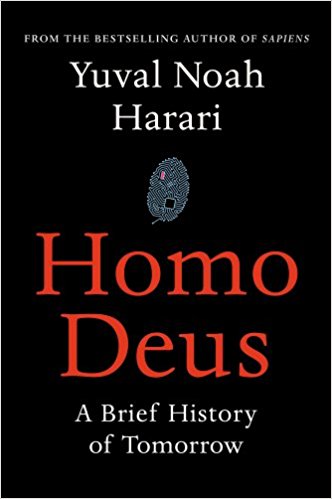
Homo Deus coverHumanist? Liberal?

I’m in the middle of reading Homo Deus, Yuval Harari’s follow-up to his excellent Sapiens. It is so fluently and clearly explained, that it easy to forget that it’s possible that he’s not right in some of the things he says, but I suspect he generally is! His theme is understanding humanity and it’s trajectory, especially the drives for human bliss, human power, and an unlimited human lifespan.

I was particularly interested in what he says about humanism, the doctrine that glorifies those three aims. What follows may not do justice to his arguments…

He points out that humanist ideas have replaced the old European reliance on forms of religious authority to such an extent that humanist assumptions tend to be invisible to us. Particularly liberal ones. And as he went through them, I had to acknowledge that I felt a shudder of horror at the sense that they are assumptions. So in Buddhist terminology they are they are ditthis, views, and ditthis at best need to be taken as provisional conceptualisations, and at worst may be wrong views. He describes three basic forms of humanism – evolutionary, socialist, and liberal.

The evolutionary form says that some people are superior to others, and the species will progress if the superior ones are allowed to dominate. This may be comparatively benign, in the sense of recognising genuine artistic or scientific genius, or in the sense of recognising the possibility of genuine spiritual progress. But we particularly observe it in the horrors of eugenics and Nazism. Like all forms of humanism, socialist humanism values humanity above everything else, but it does so in the mass rather than in the form of individuals, initially overthrowing the privileged few through class conflict, and dreaming of an egalitarian utopian society in the future.

Liberal humanism is probably the one most taken for granted, it started earlier than the other two, as the value of each individual was recognised. It led to a sense that one’s own wishes and preferences are paramount, the more choice the better, and perhaps “do what thou wilt shall be the whole of the law”, leading to consumerism, valuing immediate personal desires and so on. You need to think for yourself, and come up with your own set of values. The interior world of personal experience is far richer and more important than the exterior or shared worlds. All meaning is to be drawn from personal inner experiences. Human life is sacred, people must be kept alive at all costs. Free will and free choice are the highest authority. Be true to yourself: once you’ve clarified your feelings, they will tell you how to behave, and what is right. Something is bad only if it makes you feel bad, and as well as amplifying our own feelings, we should respect the feelings and sensitivities of others.

So our personal experience is prioritised – a combination of sensations, emotions, and thoughts – and we need to become increasingly sensitive to the flowing variety of our experiences. Thus we specialise like gourmets in our favourite range of sensations, sharpening our aesthetic sense, and also developing our ethical sense about what is right.

Now it seems to me that the basics of humanism have a lot going for them, and that basic Buddhism does include a humanist message, particularly the message of cultivating the psyche and its sensitivity. But it is salutary to me to notice how much I take the liberal humanist message for granted, and reinterpret the grand sweep of Buddhism almost entirely within that framework, though sometimes I use the evolutionary or socialist humanist frameworks. But is Buddhism really a framework that puts the individual human being, especially me, at the centre of all things?

I’ve long felt oppressed by the tyranny of my own preferences. And my impression is that most practising Buddhists I know are not very different from the mass of Western consumers in how strongly their decisions are based on what they happen to want at the time, whether it’s snacks, the temperature of the room, the comfort of the seat, the retreat or holiday destination, or even their moral judgements and political opinions… If you arrive at a retreat, are you eager to choose your own room and bed, hoping most are still free? If your bed is allocated before you arrive, do you find yourself complaining, at least tacitly, that it does not fully suit your needs?

Being governed by immediate preferences is giving priority to vedana. Vedana means the sensation, usually pleasant or unpleasant, that is an aspect of every moment of experience, and impels us to welcome and repeat the experience — or not. But my understanding of the Dharma is that vedana is, in a sense, given. I don’t need to pay very much attention to it, what’s important is karma, that is basing my decisions to act on whether it is skilful or unskilful, rather than on whether I feel like doing it or not. (Fortunately, the skilful is often quite pleasant!) In any case, is there really a unitary me with a deciding will?

Like a good liberal I aspire to improve my sensitivity; sometimes I am pleased to say it is my karmic sensitivity that I value. But how often do I prioritise broader issues of welfare and integrity over the ‘me’ and its petulant demands?